CDA and JICA Sign MoU for Integrated Water Supply, Sewerage and Drainage Master Plan of Islamabad
Date: Sep 15, 2026
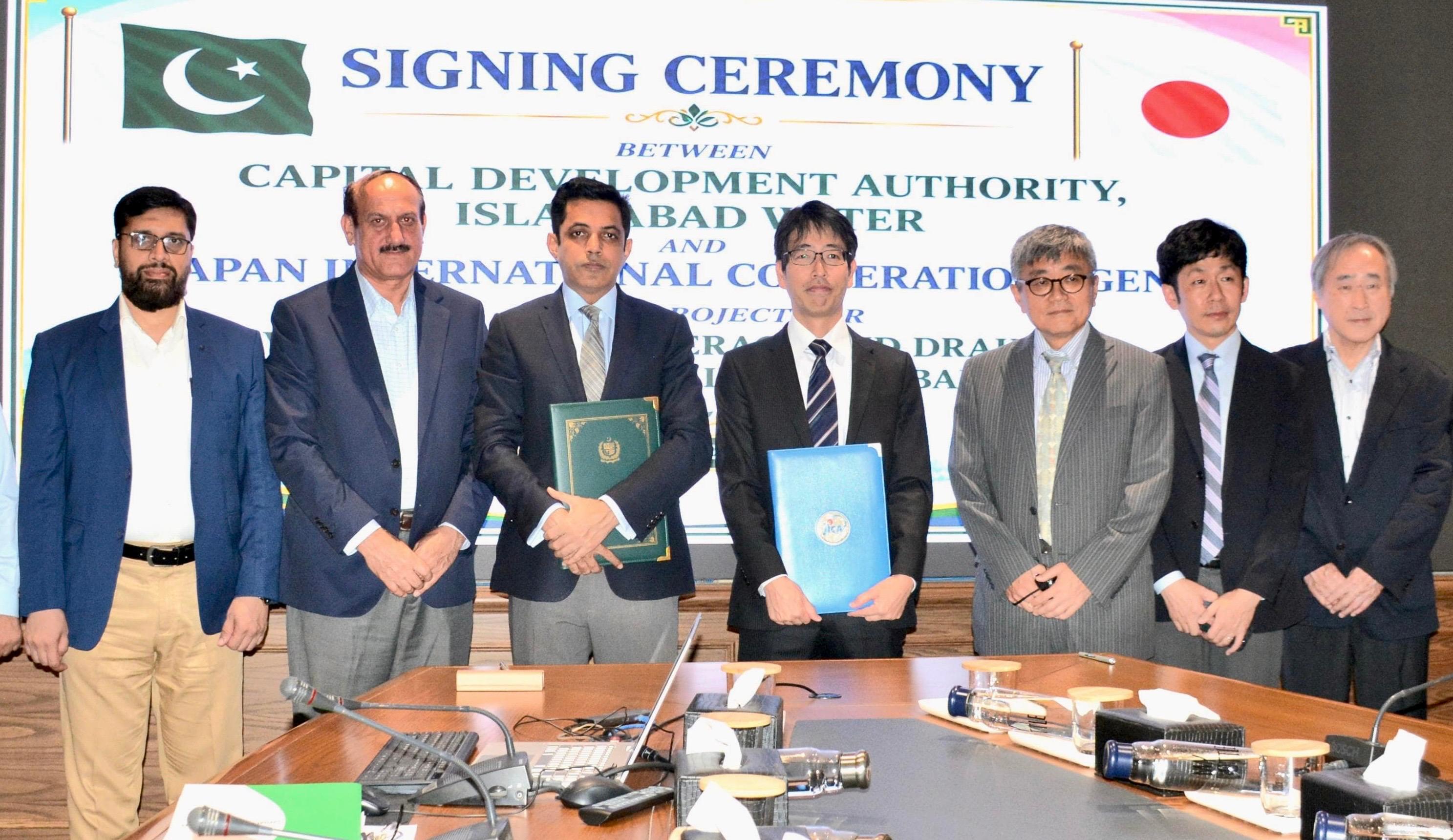
Islamabad, September 14, 2026: The Capital Development Authority (CDA) and the Japan International Cooperation Agency (JICA) signed a Memorandum of Understanding (MoU) at CDA Headquarters today for the preparation of an integrated Water Supply, Sewerage and Drainage Master Plan for the Islamabad Capital Territory (ICT). Chairman CDA and Chief Commissioner Islamabad, Sohail Ashraf, signed on behalf of CDA, while Mr. MIYAGAWA Masahito, Team Leader of the JICA Detailed Planning Survey Team, signed on behalf of JICA. The ceremony was attended by Director General Islamabad Water Sardar Khan Zimri, Joint Secretary (Japan) Economic Affairs Division Ms. Fakhryia Anjum and other officials. The signing marks an important milestone in Pakistan-Japan cooperation for strengthening Islamabad's water management infrastructure, improving public service delivery and ensuring sustainable water resources for present and future generations. The initiative will support CDA's commitment to providing water to all citizens of Islamabad and addressing the capital's growing water requirements through long-term planning and responsible resource management. The 36-month technical cooperation project will cover ICT Zones 1–5, with detailed facility planning focused on Zone 1 and strategic assessment of Zones 2–5. The Master Plan will adopt 2050 as its target year and provide short-, medium- and long-term strategies for sustainable water supply, sewerage, sanitation and drainage services. Integrated water resource planning The project will assess existing and potential water resources, including surface water and groundwater, to identify sustainable options for meeting Islamabad's long-term water requirements. It will review existing water resource development proposals, water demand forecasts, treatment and distribution infrastructure, storage capacity, water quality, leakage reduction and operation and maintenance requirements. The study will also examine the feasibility of potential water sources and development options, including relevant proposals for dams and other water supply projects, while considering climate risks, environmental impacts, costs and implementation requirements. Sewerage, sanitation and drainage The Master Plan will address sewerage and sanitation requirements across both sewered and non-sewered areas of the ICT. It will assess wastewater collection and treatment facilities, decentralized treatment systems, on-site sanitation and fecal-sludge management, with the objective of improving public health and protecting the environment. An integrated assessment of stormwater drainage networks, natural streams, drains and flood-risk areas will identify priority interventions to improve drainage capacity, maintenance and flood resilience, particularly in developing areas. Digital transformation and improved services Digital transformation will be an important component of the project to improve operational efficiency, customer management and financial performance of Islamabad Water. The proposed measures may include digital customer records, meter reading, billing and collection, asset management, leakage detection, water-quality monitoring and complaint handling. Pilot activities will also explore water metering, monitoring of supply hours, flow, pressure and water quality, as well as improved customer service systems. The findings will support future action plans and better management of water services. Climate resilience and future investment The Master Plan will incorporate climate change adaptation and mitigation measures, including water conservation, diversification of water sources, treated wastewater reuse, groundwater recharge, efficient pumping and climate-resilient infrastructure. Sustainable groundwater use, affordability, equitable access and the needs of vulnerable communities will remain important considerations. The project will identify priority infrastructure and investment requirements on the basis of urgency, technical feasibility, economic and financial viability, environmental and social impacts, climate resilience and implementation capacity. It will provide a strategic basis for future budgeting, financing, project formulation and implementation. Institutional coordination and capacity development A Joint Coordination Committee, chaired by the Chairman CDA, will oversee coordination, progress review and monitoring of the project. CDA and Islamabad Water will jointly formulate the Master Plan with the JICA Mission Team, ensuring institutional ownership, technical capacity development and alignment with Islamabad's future needs. The project will also promote coordination among relevant government departments, water and development agencies, private developers and other stakeholders to improve service delivery and support integrated urban development. The draft Record of Discussions is tentatively expected to be signed in late November 2026, subject to completion of necessary procedures. The technical cooperation project is tentatively expected to commence in March 2027. The signing of the MoU reflects the shared commitment of CDA, Islamabad Water and JICA to developing a modern, efficient and climate-resilient urban water management system. The initiative will help safeguard water resources, strengthen public services and support Islamabad's development as a planned, beautiful, sustainable and environmentally responsible federal capital, ensuring water security for citizens today and tomorrow.
Related Images


Related Links
- Fire Incident Reported at Supreme Court of Pakistan's Admin Block
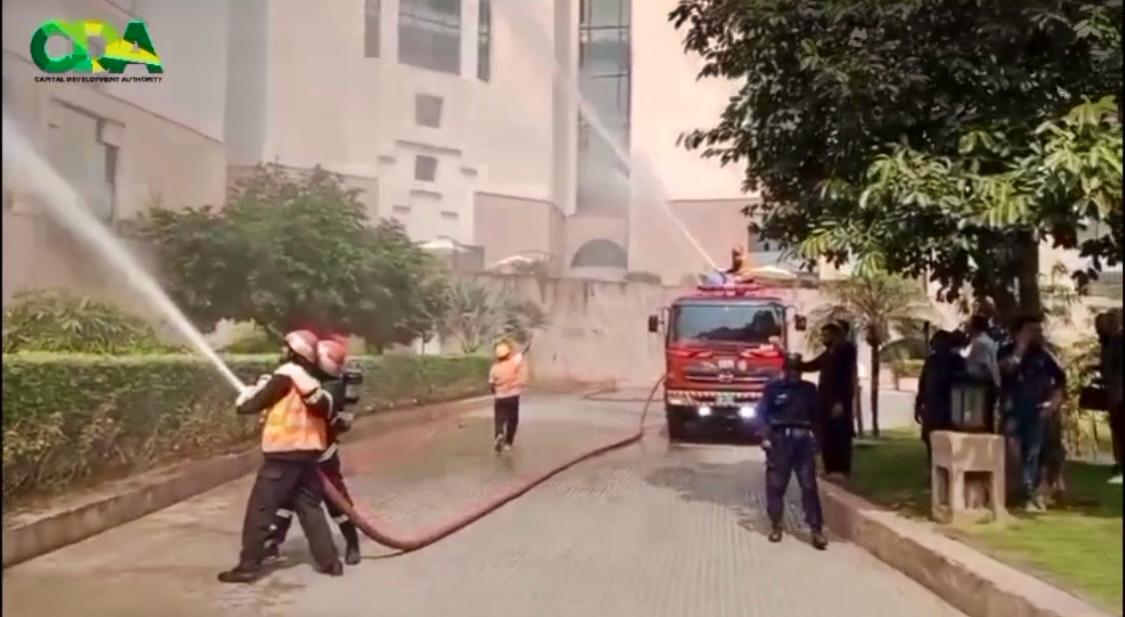
- Capital Emergency Service CDA Conducts Fire Mock Exercise at Serena Hotel Islamabad
- CDA Capital Emergency Services Marks World First Aid Day with Awareness and Demonstration Event
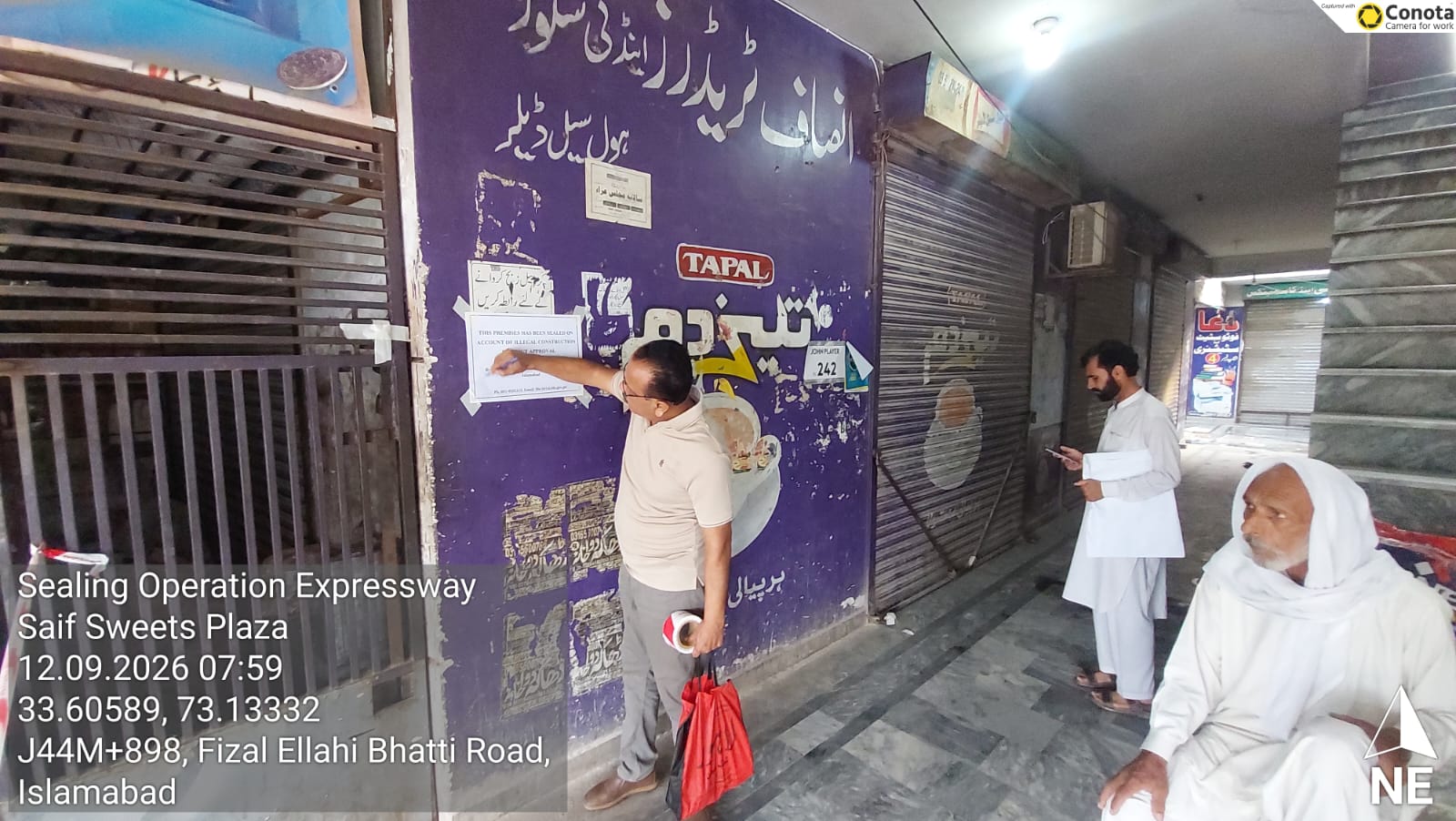
- CDA Continues Comprehensive Operation Against Encroachments, Illegal and Non Conforming Constructions Along Islamabad Expressway Service Road East
- CDA Intensifies Dengue Prevention & Vector Control Operations Across Islamabad
- CDA Accelerates Development, Beautification and Civic Services to Transform Islamabad into Green, Clean and Tourist-Friendly Capital